Learning Experience Platform
How we designed a custom training portal that doubled course completion rates and launched training for 800 employees on AI-assisted quality control in four weeks.
Manufacturing & Training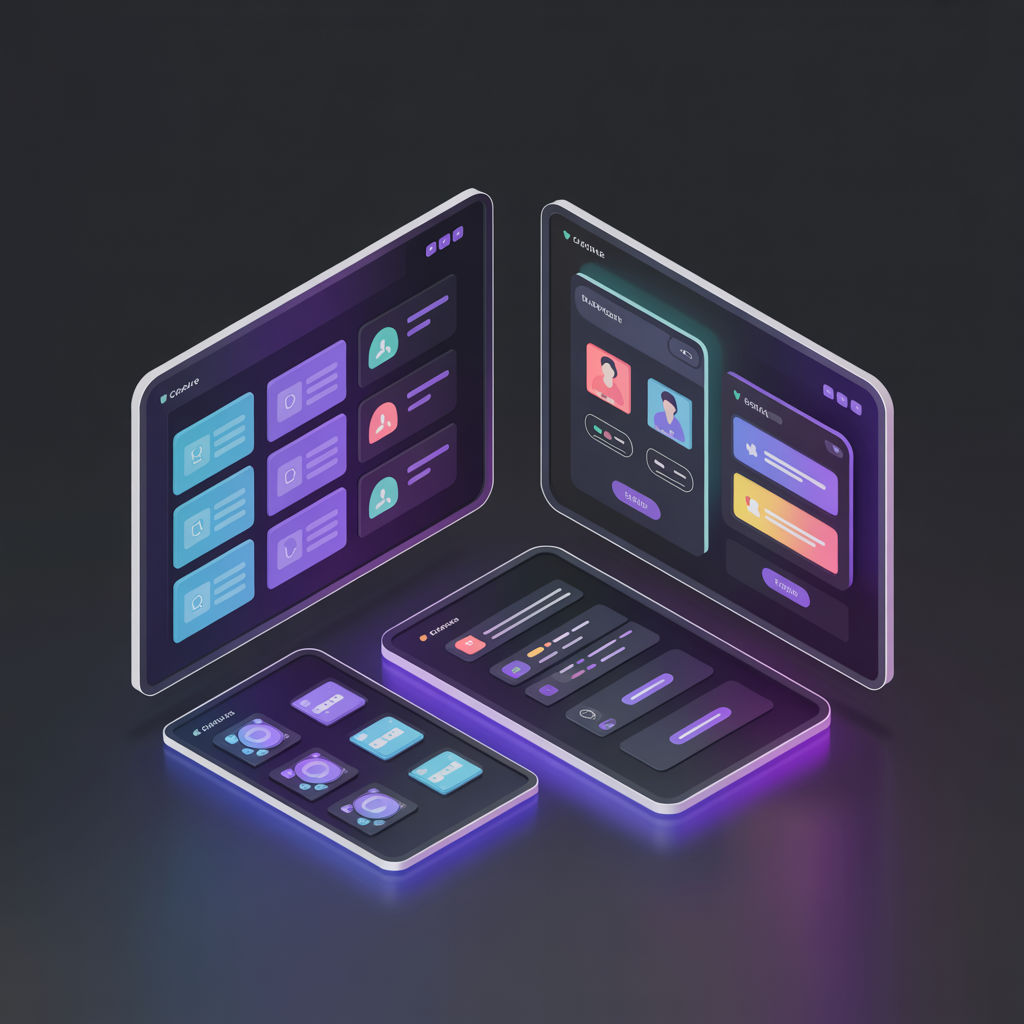
A workforce transformation with an aggressive timeline
Our client, a precision manufacturing company with eight hundred employees across three production facilities, was implementing AI-assisted quality control systems on their production lines. The new technology promised to reduce defect rates by over forty percent, but only if the entire operations workforce could be trained to work effectively alongside the AI tools within a single quarter. The company's existing training infrastructure, a collection of PowerPoint presentations delivered in classroom sessions, was entirely inadequate for the scale and speed required.
Previous training initiatives had struggled with low engagement and completion rates. The company's last major upskilling effort, a compliance training rollout the prior year, achieved only a forty-six percent completion rate despite being mandatory. The workforce was diverse in terms of technical literacy, shift schedules, and primary language, factors that made a one-size-fits-all approach impractical. Floor supervisors could not afford to pull entire teams off the line simultaneously, and the company needed training that workers could complete at their own pace without disrupting production output.
The stakes were high. The AI quality control systems were already purchased and scheduled for deployment. Without a trained workforce, the multi-million-dollar investment risked being underutilized or, worse, misused in ways that could compromise product quality rather than improve it.
Adaptive learning designed for real-world production environments
Custom LMS Development
We built a custom learning management system designed from the ground up for the manufacturing floor. The platform works on the shared tablets and kiosks already present at each production station, requiring no additional hardware investment. Content loads instantly even on the facility's bandwidth-constrained network, and sessions can be paused and resumed at any point, accommodating the fragmented availability windows that production schedules create.
- Works on existing floor tablets and kiosks
- Offline-capable with background sync
- Multi-language support (English, Spanish, Vietnamese)
Adaptive Learning Paths
Rather than forcing every employee through identical content, the platform adapts to each learner. An initial skills assessment places workers into role-specific tracks, and the system adjusts difficulty and pacing based on individual progress. Workers who demonstrate mastery can skip ahead; those who struggle receive additional practice exercises and alternative explanations tailored to their learning style.
Analytics and Management Dashboard
We built a comprehensive analytics layer that gives supervisors and HR real-time visibility into training progress. The dashboard tracks completion rates by shift, facility, and role; identifies employees who may need additional support; and generates compliance reports for the company's quality certification requirements. Automated nudge notifications remind workers who have fallen behind, keeping momentum high.
Record-breaking engagement and speed
Course completion jumped from 46% on previous initiatives to 92%, a record for the company and well above the 80% target leadership had set.
The platform was designed, built, populated with content, and rolled out to all 800 employees within four weeks, meeting the aggressive deployment deadline.
Workers rated the training experience 4.6 out of 5, citing the adaptive pacing and practical hands-on exercises as standout features.
Built for the realities of production environments
The learning management system was architected as a progressive web application that runs on any modern browser, eliminating the need for app store installations on shared floor devices. We implemented an offline-first data strategy using service workers and local storage, so employees can continue training during network interruptions that are common in industrial environments. Completed modules sync automatically when connectivity is restored.
The adaptive learning engine uses a lightweight assessment algorithm that evaluates performance across knowledge checks, practical exercises, and time-on-task metrics. The algorithm maps each worker's demonstrated competencies against the target skill profile for their role, dynamically selecting the next content module from a library of over two hundred micro-lessons. Each micro-lesson is designed to be completed in five to ten minutes, fitting within the natural break points of production schedules.
Content was developed in close collaboration with the client's quality engineering team to ensure technical accuracy, and all modules were reviewed by frontline supervisors for practical relevance. We created three language tracks with localized content, not just translated text but culturally adapted examples and terminology that resonate with each language community within the workforce.
Training became the catalyst for broader transformation
The immediate impact was the successful adoption of the AI quality control systems. Within the first month of deployment, defect detection rates improved by thirty-eight percent, closely tracking the projected benefits that justified the original technology investment. Critically, the well-trained workforce used the AI tools as intended, avoiding the misuse patterns that had plagued rollouts at peer companies where training was treated as an afterthought.
The platform's success created a ripple effect across the organization. The company has since expanded the LMS to cover safety training, equipment certification, and onboarding for new hires. The adaptive learning approach has become the company's standard for all workforce development programs, replacing the classroom-based model entirely. HR leadership estimates the platform has reduced per-employee training costs by roughly forty percent while delivering measurably better outcomes.
"Previous training programs felt like checking a box. This one actually changed how our people work. The adaptive approach met every employee where they were, and the results speak for themselves. We have set a new standard for what training should look like in a manufacturing environment."
— VP of Human Resources, Manufacturing Client
See more of our work
This project showcases our ability to design custom learning experiences that drive measurable adoption and skill development. Explore more of our client results across AI automation and app development.
← View all case studiesReady to build something like this?
Whether you need a custom learning platform, an internal tool, or an AI-powered workflow, we can scope and deliver it. Book a free strategy call to explore what is possible.
Get Started